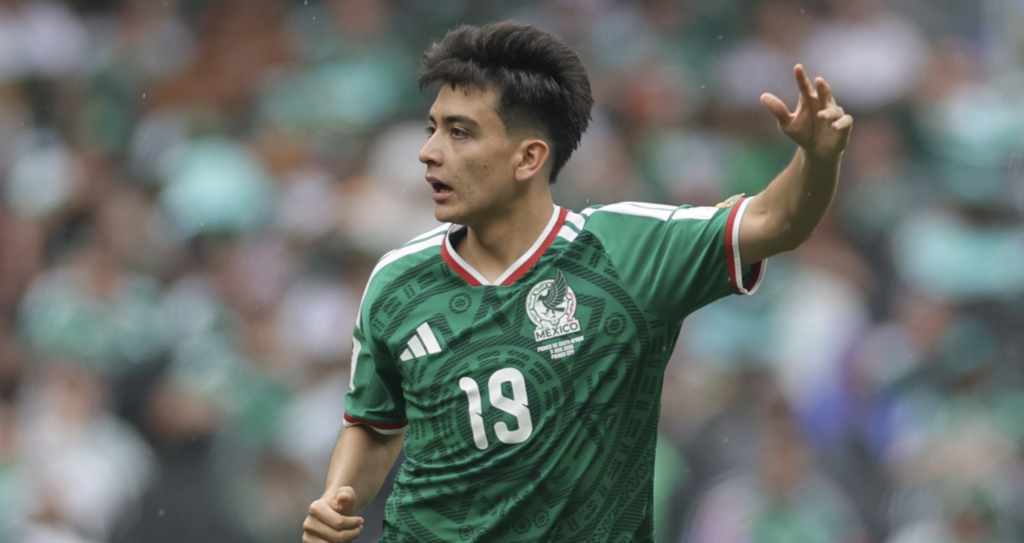

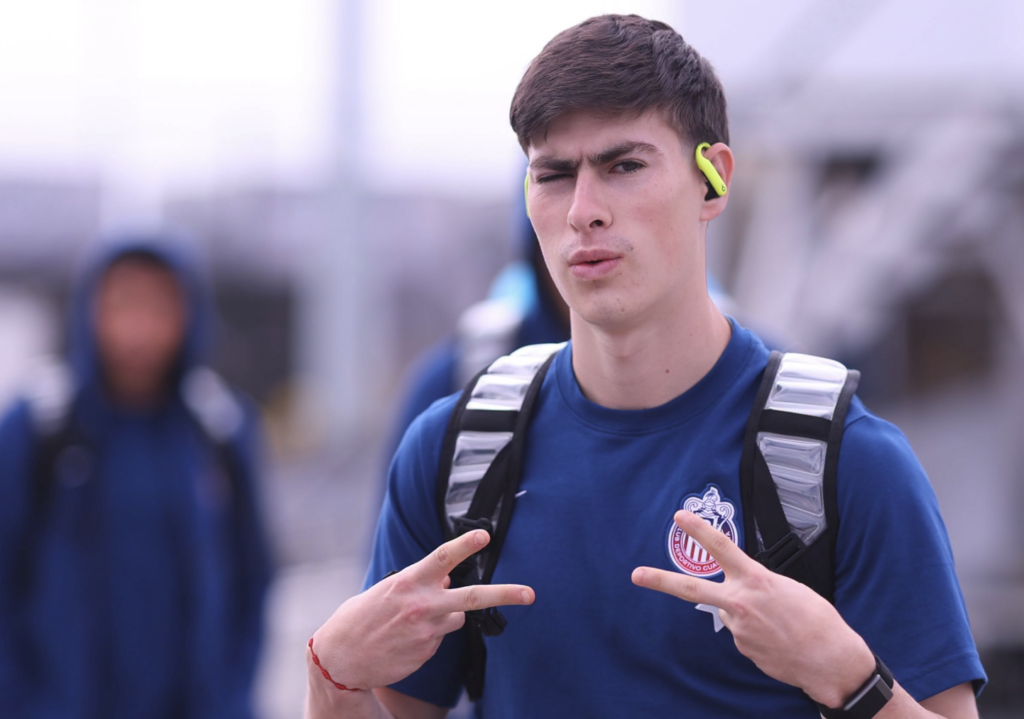
Armando González’s saga appears to be reaching its final chapter. After several days of negotiations, rejected offers, and financial disagreements, Chivas and Olympiacos have reportedly reached a final agreement for the Mexican forward, according to SPORT24.
The 23-year-old forward wanted to make the leap to European soccer, and the Greek club had been trying for several days to convince Guadalajara. Even the player’s representatives traveled to Greece, and coach José Luis Mendilibar reportedly gave the green light to finalize the deal.
There was just one problem: Chivas didn’t want to let him go easily.
The first offer was rejected. The second one didn’t convince them either. While reports in Mexico consistently cited a buyout clause of around $15 million, Olympiacos continued negotiating until they found a solution that ultimately brought the two sides closer together.
Olympiacos will pay €8.5 million
According to the report, the deal includes 8.5 million euros guaranteed for Chivas, plus a 10% share for the Mexican club in a future sale of González. The deal could still reach 10.5 million euros with certain bonuses, although the exact criteria for triggering those amounts have not been disclosed.
Therefore, it cannot be confirmed that the variables are related to goals, games played, titles, or qualification for European tournaments. The structure of the deal, however, is attractive to both parties.
Olympiacos avoids having to pay the $15 million upfront that had been mentioned as a possible benchmark, while Chivas retains the possibility of earning more money if González makes a name for himself in Europe and is subsequently sold for a significant sum.
Chivas protects itself with a future sale in mind
For Guadalajara, one of the biggest risks was quite obvious. Selling a 23-year-old Mexican forward for around 8.5 million euros, watching him quickly succeed in Europe, and then seeing another club pay a fortune for him. The 10% share of any future transfer fee allows Chivas to maintain a financial stake in that possible scenario.
Let’s imagine that González adapts wonderfully, starts scoring goals in Greece, and attracts interest from clubs in bigger leagues. If Olympiacos ends up selling him for 25 million euros, Guadalajara would be entitled to a share of that deal. In this way, the red-and-white club doesn’t completely lose the chance to benefit from the player’s growth.
Mendilibar reportedly chose González personally
Another important detail is the role of José Luis Mendilibar. According to SPORT24, the Spanish coach reportedly selected González from among the various options Olympiacos had on the table.
This is no minor detail. The Greek club has reportedly made a public commitment to provide the coach with players he truly trusts, and González appears to be one of the first examples of that strategy. It would not, therefore, be a signing made solely by the sports department. Mendilibar is said to have given his approval and is convinced that the Mexican can fit into his style of play.
Intensity will be the key for González
The Mexican forward’s adaptation to European soccer will not depend solely on how many goals he scores.
Mendilibar typically demands a lot of work from his forwards. Pressing, off-the-ball movement, the ability to attack spaces, and winning aerial duels are all important parts of his system. González will have to quickly learn to press, run behind defenders, compete physically, and create space for his teammates.
The main challenge will be translating his qualities from Liga MX to Greek soccer, and he will need to take advantage of scoring opportunities.
El Kaabi could be an asset in his adjustment
At first glance, it might seem difficult for González to get consistent playing time with Ayoub El Kaabi still on the roster, but it could also be an advantage. The Moroccan forward is an established player, and that would allow González to go through a much more natural adjustment period. He won’t necessarily have to shoulder the team’s entire offensive responsibility from day one. He’ll be able to start some games, come off the bench, and gradually get to know Greek soccer, the media pressure, and the team’s playing style. There’s even the possibility that both players could share the field when Olympiacos needs to increase its presence in the box.
The fee can also create pressure
There’s another side to the coin. If Olympiacos ends up paying a potential 10.5 million euros, it doesn’t seem logical for González to remain merely a rotation player for the entire season. The investment comes with expectations.
The Greek club hopes the Mexican will play an important role and, over time, become one of its key offensive threats. This could also lead Mendilibar to manage El Kaabi’s playing time differently, spreading his responsibilities across the league, the cup, and European competitions.
González wanted to play in Europe
The player’s desire is also said to have played an important role during the negotiations. According to SPORT24, González pushed to finalize his move to Piraeus because he saw Olympiacos as an opportunity to achieve his goal of playing in Europe. His coach at Chivas, Gabriel Milito, had already publicly acknowledged the Greek club’s interest and the forward’s European ambitions, even after González did not play against Santos Laguna.
Although a player’s desire cannot nullify a contract, it can change the course of negotiations. Chivas had to assess whether maintaining a rigid stance was truly the best option when the player wanted to take the next step in his career. The negotiations also signal the Greek club’s strategy. Olympiacos could have chosen to pay the amount specified in the buyout clause and quickly put an end to the matter.
Instead, they continued to negotiate.
The final deal reportedly included a lower guaranteed amount, performance-based bonuses, and a percentage of any future transfer fee. In other words, the Greek club managed to reduce the initial risk without giving up on the player Mendilibar wanted.
Now the goal is clear: to turn González’s potential into success on the European stage.
The leap from Liga MX to Europe will be the real challenge
Of course, the most important part is still to come: playing. The transition from Liga MX to European soccer requires a significant adjustment. The pace, tactical demands, physical intensity, and pressure can all be different. González will have to prove that his skills can translate to a completely new environment, but he also has an advantage: he’s only 23 years old.
If he manages to adapt quickly, compete in European tournaments, and start scoring goals, his value could rise significantly. In that scenario, both Olympiacos and Chivas could come out ahead.
The Next Step: Medical Exams and Signing
For now, the agreement between the clubs has been reported, but the steps needed to make the deal official are still pending. The process is fairly clear: authorization to travel, arrival in Athens, a medical exam, signing the contract, and finally the official announcement by Olympiacos.
Therefore, until the club publicly confirms the deal, it is most prudent to refer to a reported definitive agreement, not an officially completed transfer. After several days of tension, rejected offers, and negotiations that seemed to grow increasingly complicated, everything points to Armando González’s European adventure being about to begin.
The Mexican forward wanted to play in Europe. Olympiacos wanted him. And now only the final steps remain before the story comes to an end.