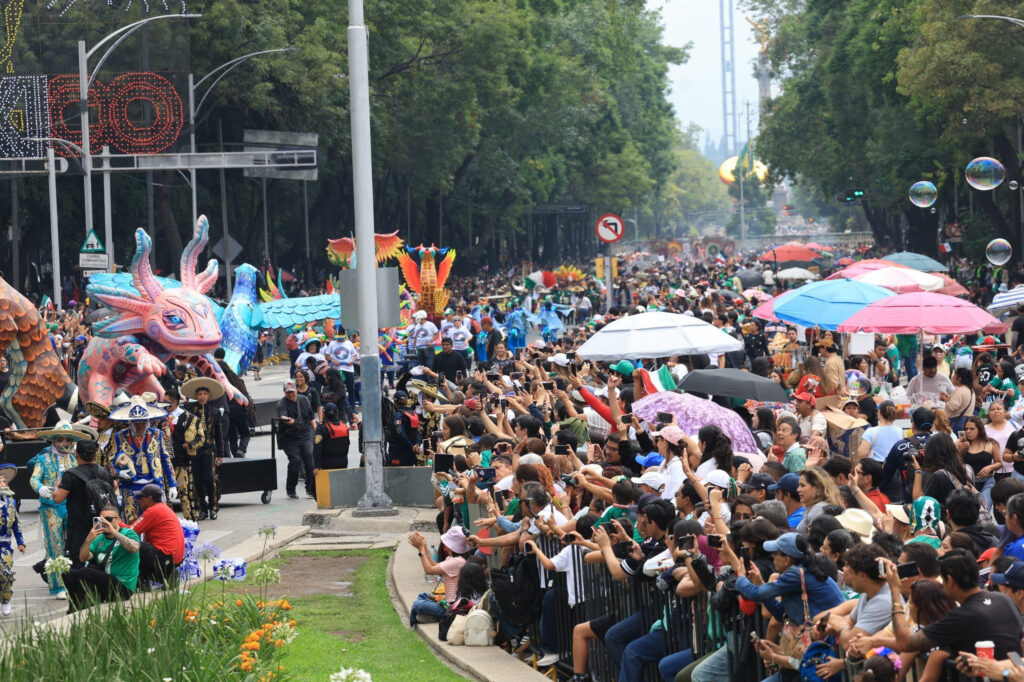

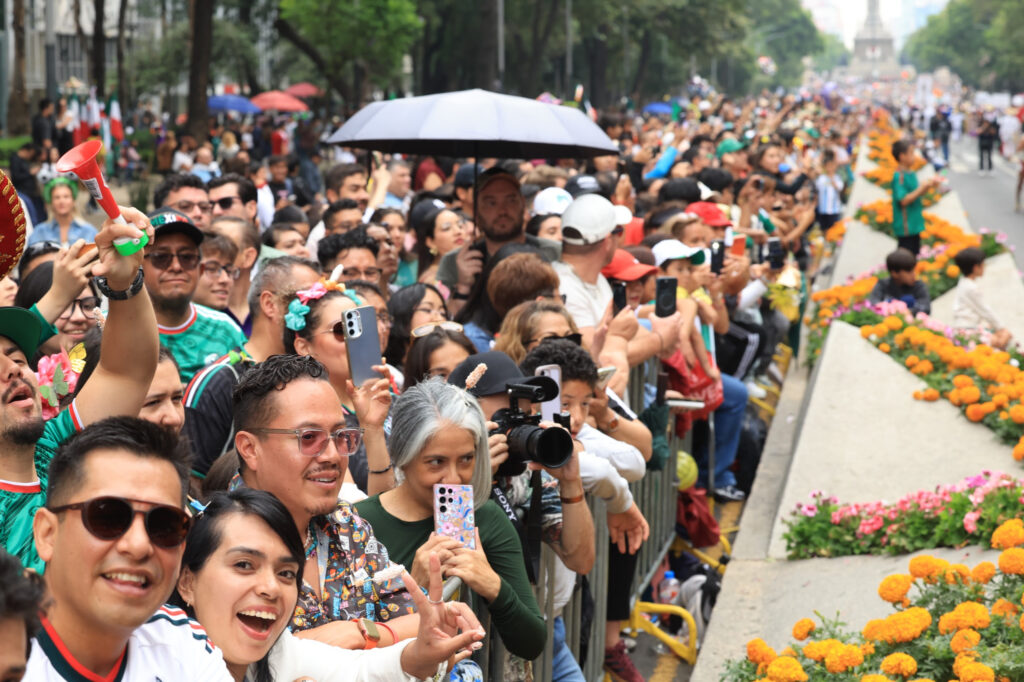
Excitement for the 2026 FIFA World Cup took over the streets of Mexico City with the World Cup Parade “The Ball Comes Home,” a spectacle that brought thousands of people together on Paseo de la Reforma Avenue for a celebration where soccer, culture, and Mexican traditions came together on one stage.
Organized by the Mexico City government, the parade took place on Saturday, June 13, and featured more than 1,400 artists, musicians, dancers, and performers who paraded three kilometers from the Glorieta de la Diana Cazadora to the Monument to the Revolution.
The event kicked off with a performance inspired by the ancient Game of Pelota, accompanied by dancers and a monumental tribute dedicated to legends of world soccer such as Pelé, Ferenc Puskás, and Paolo Rossi. From there, the parade transformed into an explosion of color and Mexican symbolism.
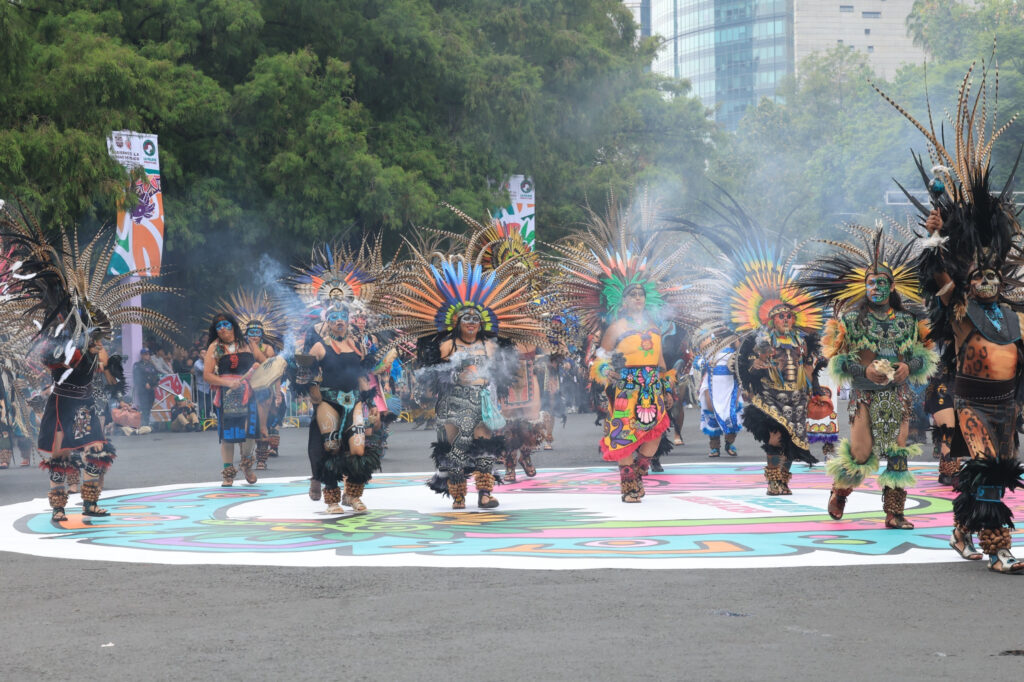
Monumental alebrijes, axolotls, hummingbirds, cacomixtles, trajineras, catrinas, and dance troupes paraded alongside chinelos, caporales, and representatives of the city’s indigenous peoples, offering a glimpse of the cultural richness that sets Mexico apart in the world.
The country’s diversity was also prominently featured through artistic expressions and traditional costumes from all 32 states. A large Mexican marching band accompanied the parade, while giant balloons and bicycles decorated with the flags of the participating nations highlighted the tournament’s global nature.
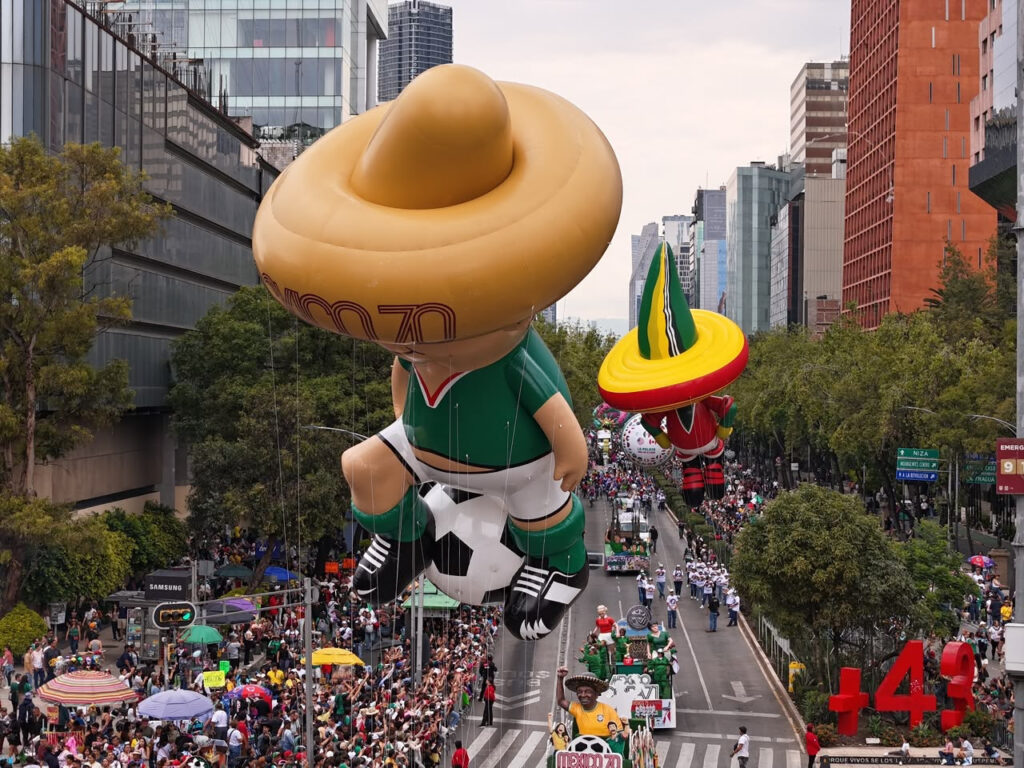
Memories of the World Cup came to the fore during the parade. Attendees relived iconic moments from Mexico ’70, including references to the historic championship won by Pelé, as well as memories of the 1971 Women’s World Cup, whose stars were recognized by the crowd with applause and cheers.
Later on, Mexico ’86 made its presence felt with the figure of Pique and a reenactment of Diego Armando Maradona’s famous “Hand of God,” one of the most memorable moments in World Cup history.
The final stretch of the parade became a true postcard of Mexico City. Characters inspired by the work of Diego Rivera mingled with organ grinders, female wrestlers, pachucos, and traditional vendors. One of the most celebrated moments came with the appearance of Sonido La Changa, which got hundreds of people dancing along Reforma Avenue.
The finale featured a batucada accompanied by wrestlers, enormous Quetzalcóatl balloons, and a monumental axolotl, putting the finishing touch on a celebration that turned the city’s main avenue into a collective party.
With thousands of people gathered in the streets, the capital once again demonstrated why it is one of the world’s great World Cup cities, celebrating once more that soccer transcends the field to become a language capable of uniting generations, cultures, and entire communities.