

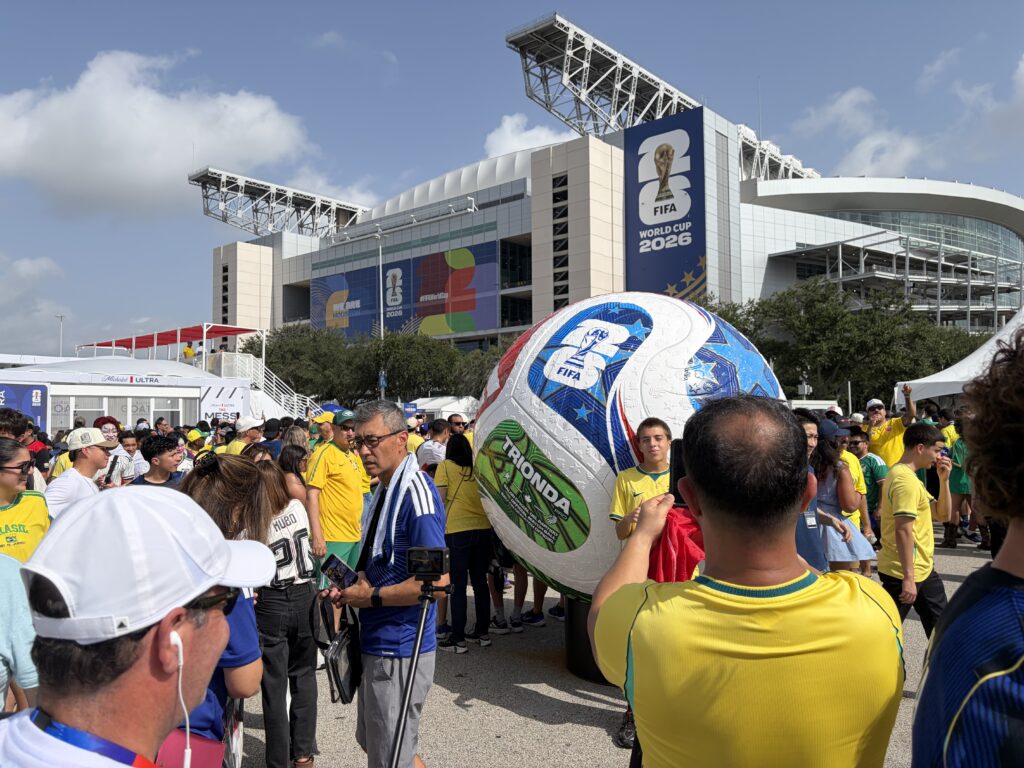
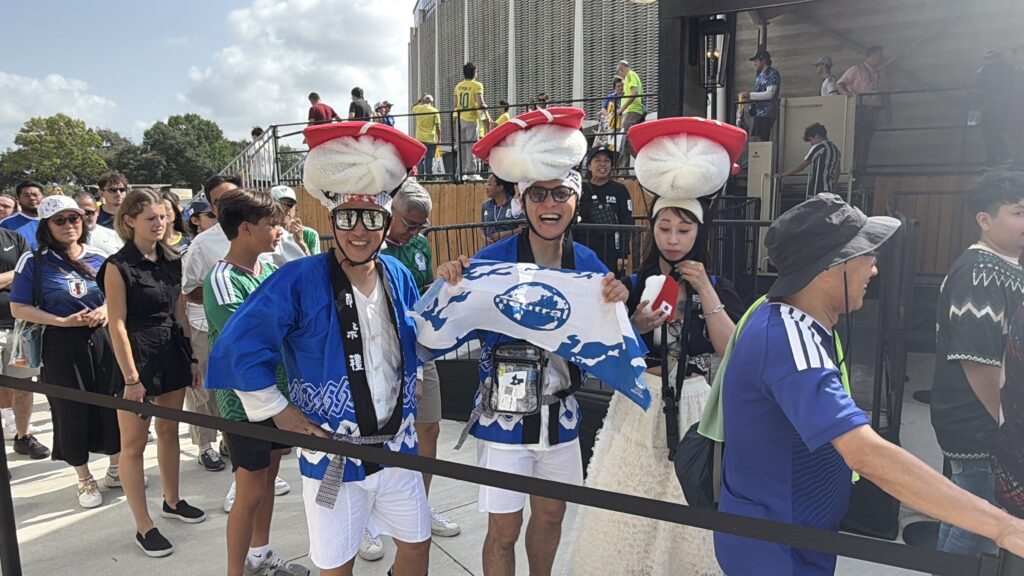
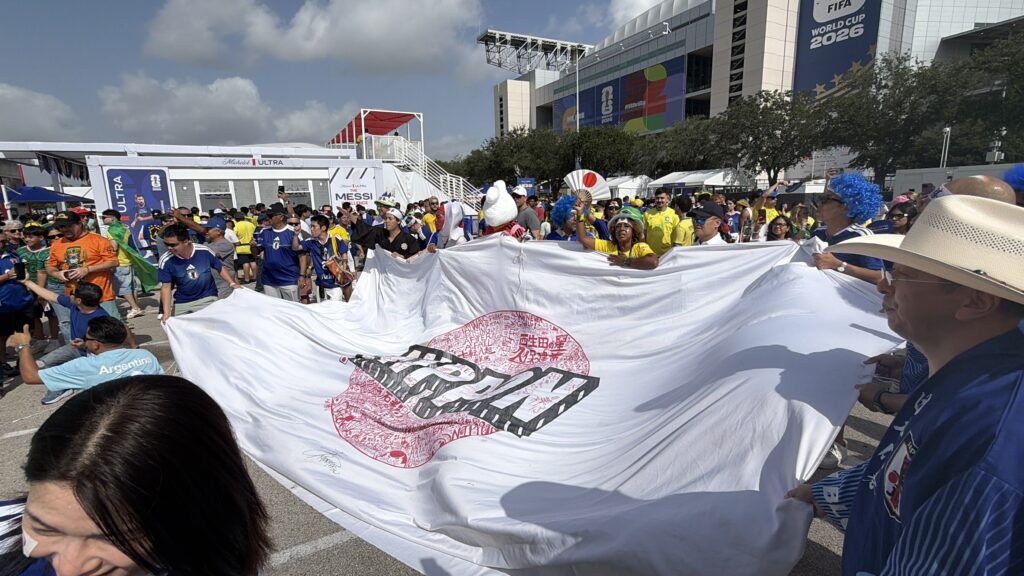
Japanese and Brazilian fans, each on their own, filled the plaza and the area surrounding the stadium in Houston ahead of the Round of 16 match on Monday, June 29.
A humid morning with a temperature of 88 degrees Fahrenheit set the tone for a day filled with both human warmth and sweltering heat, bringing together people from two countries united by certain bonds despite being more than half a world apart.
The ties between Brazil and Japan are historic and deep-rooted, bound by the largest community of people of Japanese descent (Nikkei) outside of Japan, which numbers more than 2.7 million people in Brazil.
History of Japanese Immigration
- The Beginning (1908): Immigration officially began on June 18, 1908, with the arrival of the ship Kasato Maru at the port of Santos, carrying the first 781 farming families.
- The Reason: Brazil needed labor for its coffee plantations following the abolition of slavery, while Japan was suffering from overpopulation and a rural economic crisis.
- Development: The immigrants transitioned from agricultural work to founding their own settlements, introducing new crops and revolutionary agricultural techniques to Brazil.
The Reverse Migration: The “Dekassegui”
- The Return (1980s–Present): Due to the Brazilian economic crisis and labor shortages in Japan, thousands of Brazilians of Japanese descent traveled to Japan to work.
- The Community: Today, Brazilians form one of the largest foreign communities in Japan (around 200,000 people), concentrated in industrial cities such as Hamamatsu and Oizumi.