
The Colombian national team’s return to Hard Rock Stadium holds significance that goes far beyond football. Two years after the riots that stained the 2024 Copa América final, Colombian fans hope that the match against Portugal—part of the 2026 World Cup group stage—will be remembered for what happens on the field rather than for trouble in the stands.
Expectations are sky-high. Not only because they’ll be facing Cristiano Ronaldo’s Portugal, but also because the match represents an opportunity to change the image left by that incident that made headlines around the world.
Fans want to put the past behind them
Among those hoping for a completely different atmosphere is Juan Nicolás, a Colombian from Bogotá, who believes this match represents an opportunity to showcase the true essence of his country.
“Now that we’re here, I feel a little pressure to prove myself and show the world a better image of our country. Colombia is a new country. Colombia has a lot to offer the world. We’re a different country, so now we have to prove it,” he said.
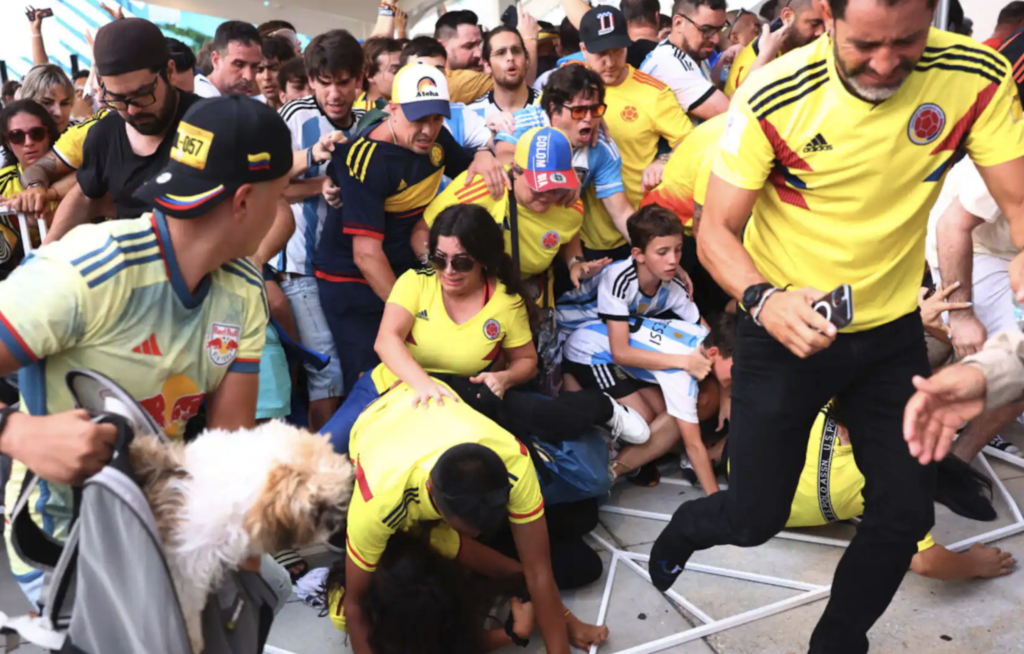
Memories of the Copa América final remain very much alive. In July 2024, thousands of people without tickets forced their way into the stadium, overwhelming security checks and causing tense moments between fans, security personnel, and authorities.
Images of people trying to get in—even through ventilation shafts—went viral on social media and raised questions about the United States’ ability to host large-scale soccer events.
A Much Stricter Security Operation
Drawing on the experience of what happened two years ago, authorities have significantly strengthened security measures for this World Cup.
Fans must pass through three security checkpoints before approaching the stadium, while parking passes will be checked from areas far from the venue. In addition, the entire perimeter is enclosed by a steel fence and is guarded by a significant security presence.
Andrew Giuliani, executive director of President Donald Trump’s World Cup task force, stated that the goal is to prevent any incidents.
“We will make sure everyone is alert and ready for that particular day so there are no problems,” he said.
He also confirmed that there will be a strong presence of federal authorities both in the vicinity of the stadium and at various locations throughout the city of Miami.
High Demand Drives Up Ticket Prices
The match’s appeal has sparked enormous demand for tickets.
On the one hand, the large Colombian community living in South Florida wants to support its national team. On the other hand, Cristiano Ronaldo’s presence on Portugal’s roster has made the match one of the most sought-after in the group stage.
On resale platforms, ticket prices have reached amounts ranging from $3,000 to over $5,000.
In light of this situation, authorities insisted that only those with a valid ticket should attend and reminded fans that there are festivals and activities for those who were unable to secure tickets.
Lawsuits over the Copa América final remain pending
As the World Cup continues, the aftermath of the final between Colombia and Argentina still has legal consequences.
Hard Rock Stadium—officially known as Miami Stadium during the World Cup due to FIFA’s commercial policies—is facing several lawsuits related to the events that occurred in 2024.
Among the allegations are claims that there were not enough security personnel to control the crowd, that there was a shortage of Spanish-speaking staff, and that fans who did have tickets were not adequately protected.
So far, the stadium’s management has not issued any public statements due to the ongoing legal proceedings.
Colombia Wants to Be Remembered for Its Football
Beyond security measures, the fans themselves hope this match will shift the conversation about their national team and their country.
“Colombia represents so many wonderful things: excellent coffee, beautiful landscapes, incredible songs, and the national football team. The dark days are behind us,” said Nadia Rodríguez, a Colombian living in Miami.
In an atmosphere completely different from that of two years ago, Colombia will seek to ensure that its return to Hard Rock Stadium is marked by football, the passion of its fans, and a clear message: the past is behind them, and the 2026 World Cup represents a new opportunity to show the world the best version of themselves.