
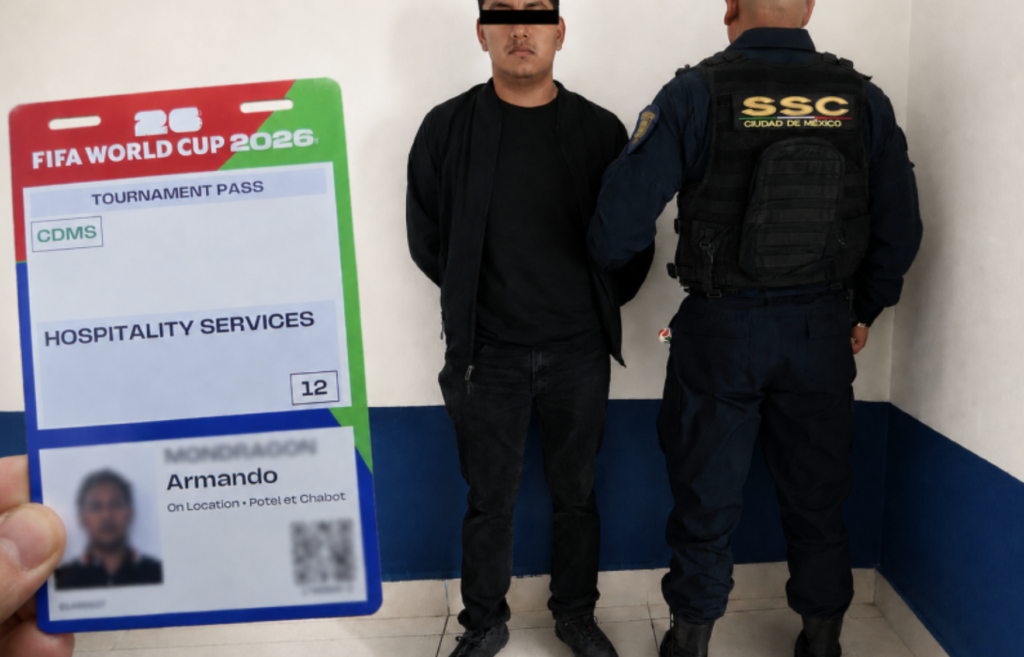
What seemed like an opportunity to profit from the World Cup ended in an arrest in Mexico City. A worker accredited for the 2026 World Cup was allegedly caught renting out his official badge to gain entry to matches at the Mexico City Stadium.
Armando “N,” 24, who was assigned to the hospitality and restaurant area of the World Cup venue, was arrested after authorities discovered he was offering his badge on Facebook groups. According to a report by the Secretariat of Public Safety (SSC), the employee was promoting the badge by promising access to matches from the hospitality area.
The irregularity was also identified by FIFA staff, who were able to trace the post and verify that the badge’s information corresponded to an accredited staff member within the tournament’s operational organization.
Following the investigation, SSC agents located and detained the worker on Tlalpan Avenue in the Santa Úrsula Coapa neighborhood. He was subsequently handed over to the prosecuting authorities, who will determine his legal status.
The case highlights the importance of the credentials used by World Cup staff. These documents are personalized and non-transferable, and they grant access to restricted areas within stadiums, operational spaces, official hotels, and logistics zones associated with the tournament.
FIFA has implemented strict security controls to monitor temporary workers and volunteers. Ahead of the 2026 World Cup, the organization launched a program involving nearly 65,000 volunteers spread across the 16 host cities in Mexico, the United States, and Canada.
Specifically in the area of accommodations, volunteers assist at official hotels, welcome guests, provide guidance on tournament-related activities, and help with the logistics of stays for delegations, sponsors, and special guests.
To join this program, applicants must meet various requirements, including being of legal age, having legal eligibility in the host country, being fluent in English, and completing selection, training, and operational evaluation processes.
Due to the sensitive nature of the roles they perform, FIFA considers any lending, renting, or misuse of credentials to be a serious offense. Such actions can facilitate unauthorized access to restricted areas and compromise the security protocols established for the World Cup.
The arrest of Armando “N” is the latest in a series of attempts at fraud and illegal exploitation of credentials that have been detected during the 2026 World Cup.