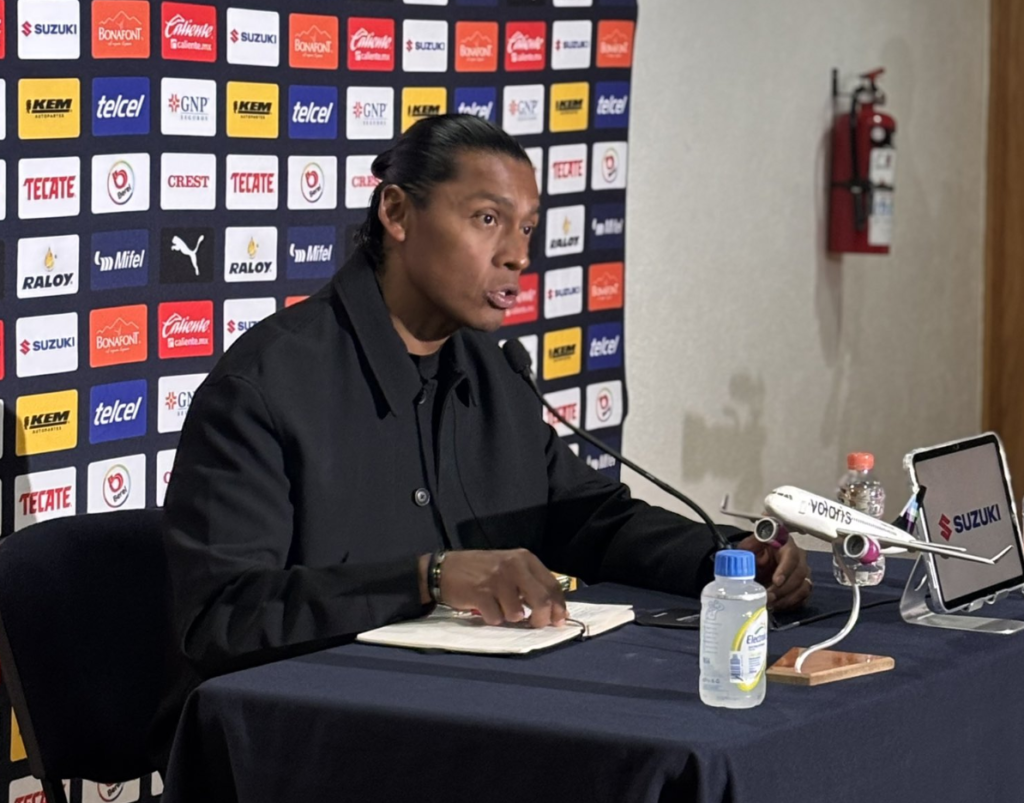

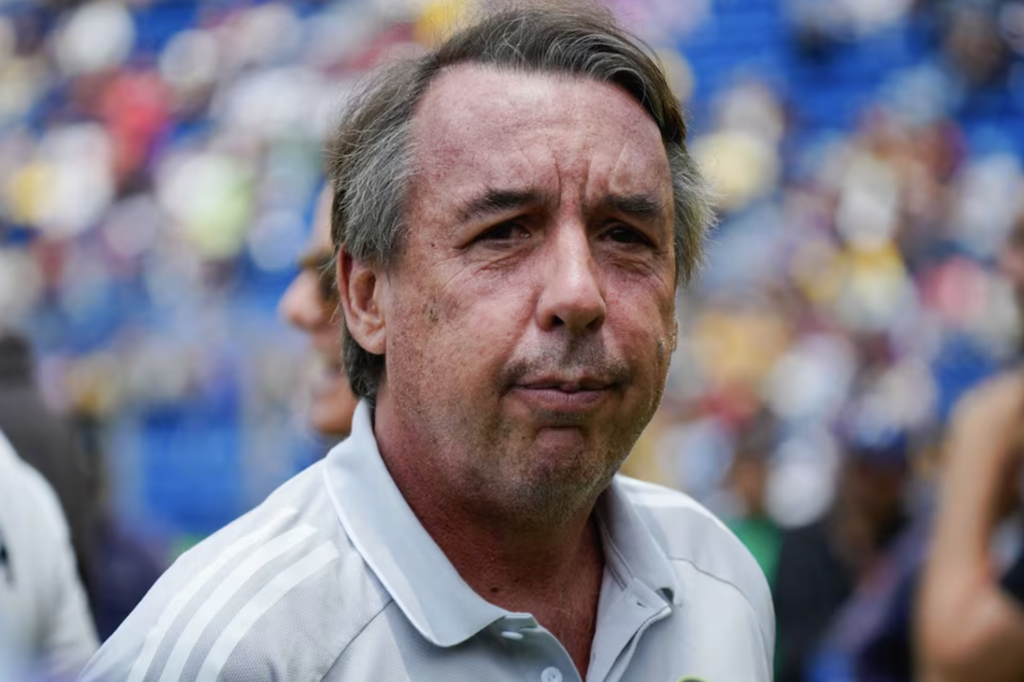
Emilio Azcárraga does not consider it far-fetched that Mexico could host the World Cup again in 2038, just 12 years after the country co-hosted the tournament with the United States and Canada.
The president of Club América and owner of Ollamani noted that Mexico should begin right now to analyze the conditions necessary to explore a new bid. Azcárraga even suggested that a potential bid for 2038 could once again be a joint effort with the United States, though he noted that Mexico could seek a greater role and host more matches than it will during the 2026 World Cup.
“With the new World Cup featuring Uruguay, Morocco, Spain, and Argentina, I thought it was over. I don’t think a World Cup in ’38 is out of the question; I don’t rule it out as long as there are confederations playing together. The United States says it’s going it alone, and it’s worth exploring again,” he told Televisa.
The businessman noted that a bid would not necessarily have to be exclusive to Mexico. If the organization were to be shared with the United States again, the intention would be to negotiate a greater Mexican share of the matches. However, Azcárraga acknowledged that it will first be necessary to review the available infrastructure and the condition of the stadiums.
“There are 12 years left until the 38th World Cup. It is important to have a vision of what we should do to host more games. We have to understand the reality of the stadiums,” he noted.
Azcárraga Backs Santiago Baños
The owner of América also defended the work of Santiago Baños, who has faced constant criticism from the Azulcrema fanbase and has become a recurring target of the hashtag #FueraBaños. Azcárraga asserted that the results speak for the sporting director and called him the most successful in Mexico.
“Santiago is in charge of sports operations. He’s the most successful sports director in Mexico. Period. Despite all the criticism and the #FueraBaños hashtag. He’s done a good job,” he said.
The businessman emphasized that the club is entering a new phase with new partners and the goal of strengthening América, while Baños remains in charge of the sports division. During his tenure, the Águilas won three consecutive Liga MX titles between the 2023 Apertura and the 2024 Apertura, as well as the Campeón de Campeones.
Azcárraga Wants Promotion and Relegation
Another issue addressed by Azcárraga was promotion and relegation between Liga MX and the Expansion League. The América owner expressed support for reinstating the system, though he considered it essential to first build a solid financial structure that would allow clubs to handle the consequences of changing divisions.
Liga MX is maintaining its decision this season not to have promotion and relegation based on performance, a situation that has drawn criticism from clubs and fans in the second division. For Azcárraga, the discussion must go beyond the competitive aspect and consider the teams’ financial viability.
“What I believe is that I am in favor of promotion and relegation. Everyone compares and says, ‘In Spain, in England, in Portugal…’ There you have a very solid second division, in the sense that it is a business and an investment that each team makes in players, facilities, and the stadium,” he explained.
Azcárraga maintained that all members of Mexican soccer are part of the same ecosystem and must participate in building a model that allows the Expansion League to generate greater revenue and have the conditions to compete for a spot in the top division.
“We’re all part of the ecosystem. How much are the rights to that league worth—the ones that provide economic viability for that team? How do you fall into that second division, and how can you bounce back? That viability is difficult both on the way down and on the way up. I don’t have a specific formula or idea for fixing that part,” he added.
The businessman also noted that he found the percentage-based standings model interesting, since a club would not be relegated due to a single poor season, but rather by accumulating poor results over several tournaments.
“From a competitive standpoint, it’s important to avoid that situation. The percentage-based standings seemed like a very good idea to me; I found it interesting. We can all have a bad season, but you’d have to have three years or six bad tournaments to be relegated,” he noted.
With these statements, Azcárraga put two relevant issues on the table for the future of Mexican soccer: exploring a potential bid for the 2038 World Cup starting now and reinstating promotion and relegation under a model that guarantees economic stability for the clubs.